Last updated November 21, 2026
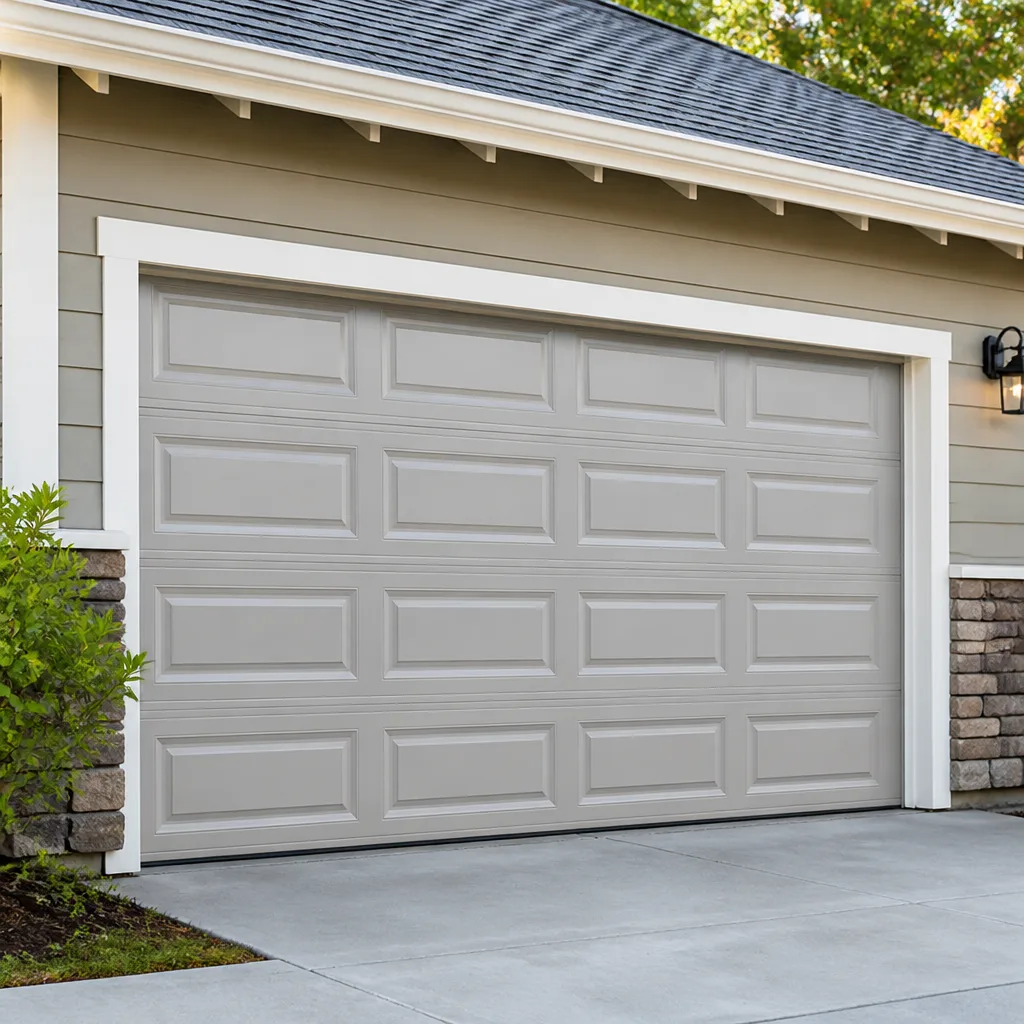 Raised-panel steel
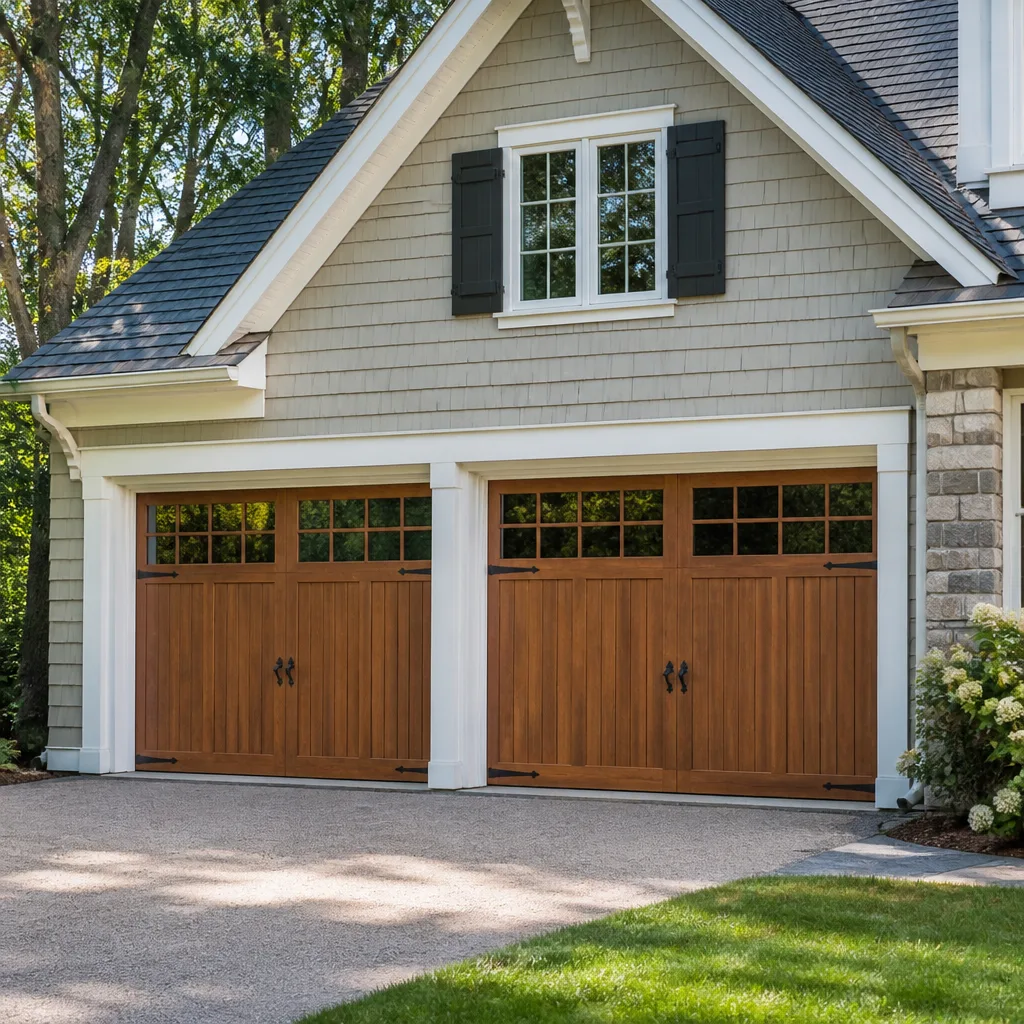 Carriage house
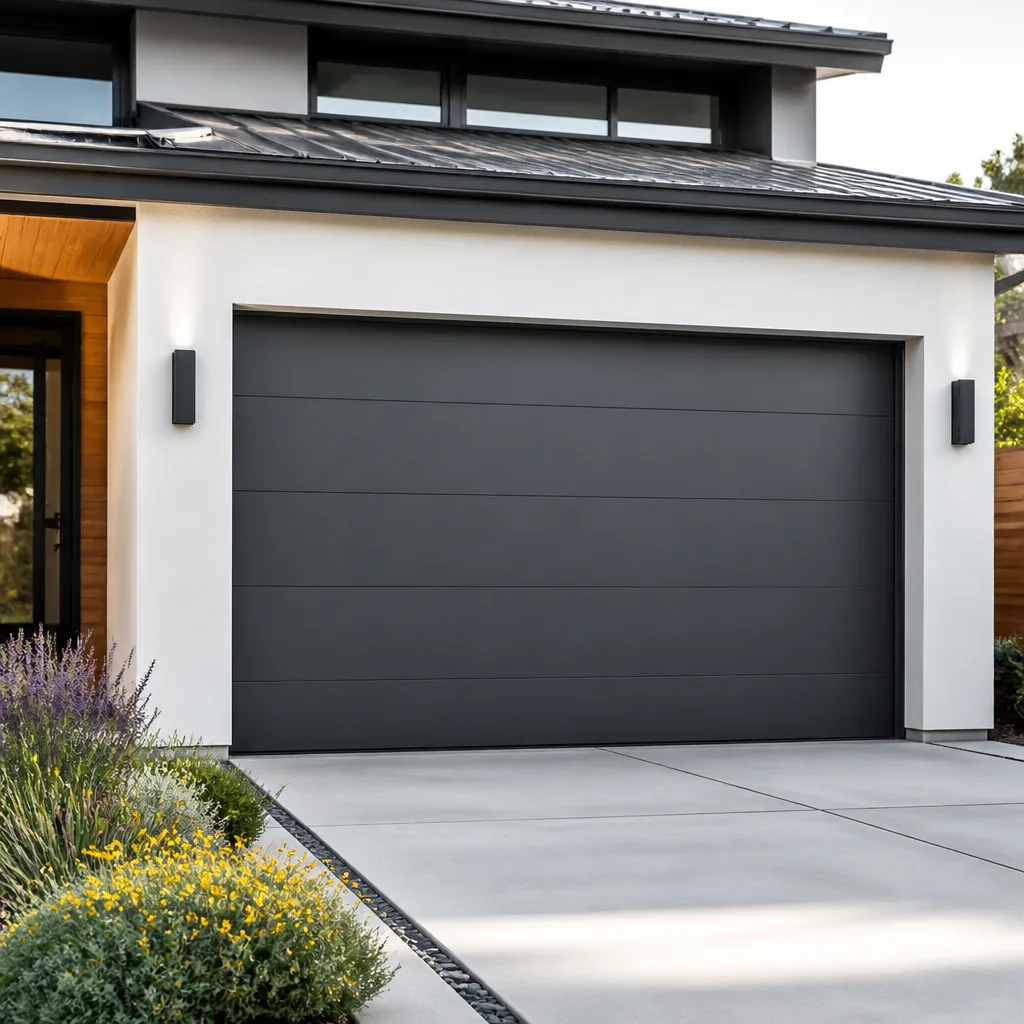 Modern flush
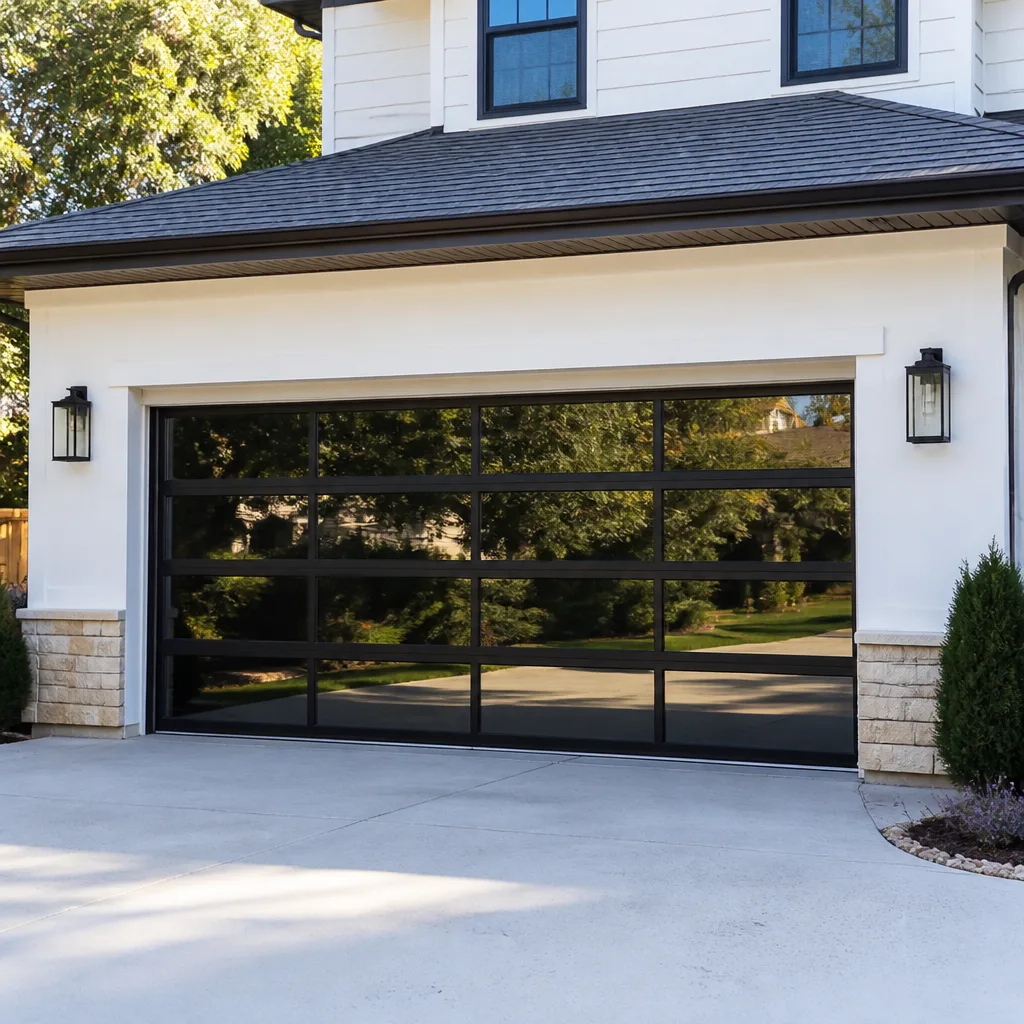 Full-view glass
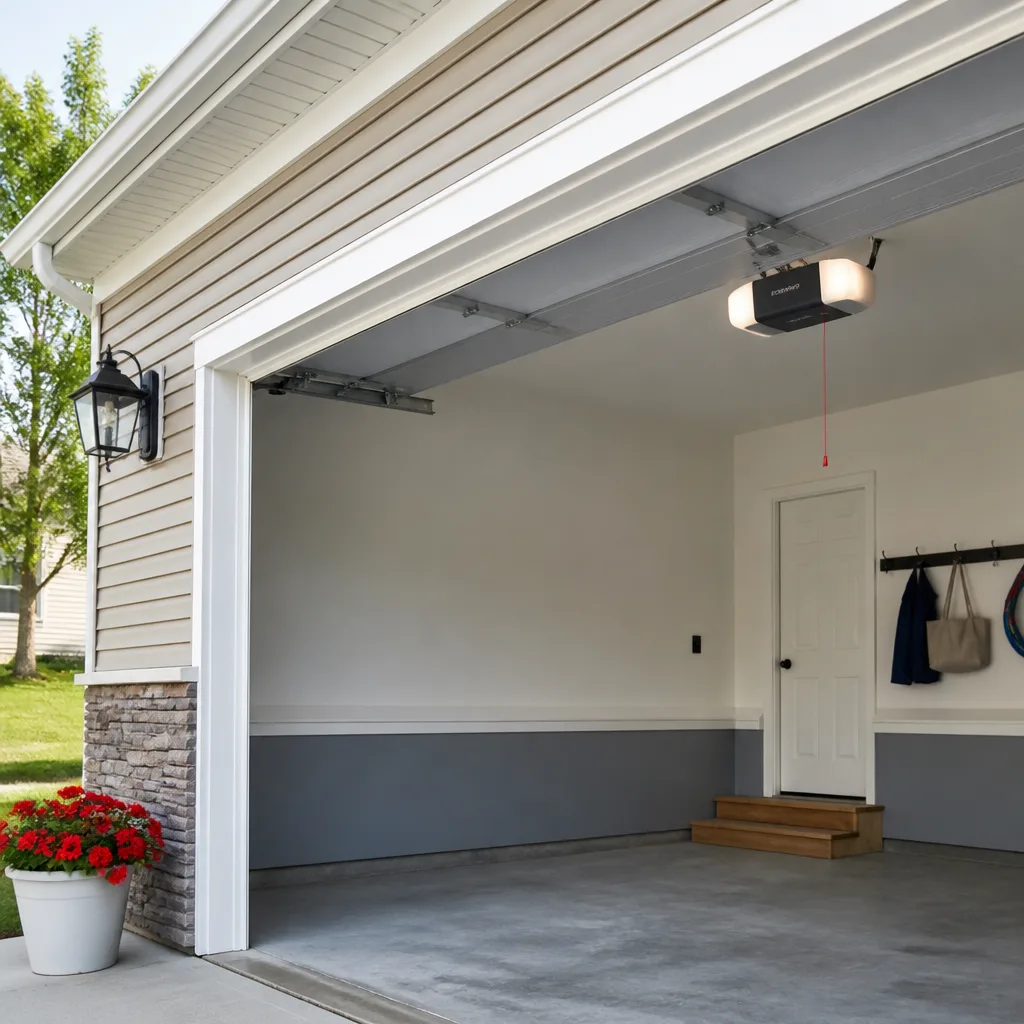 LiftMaster openers
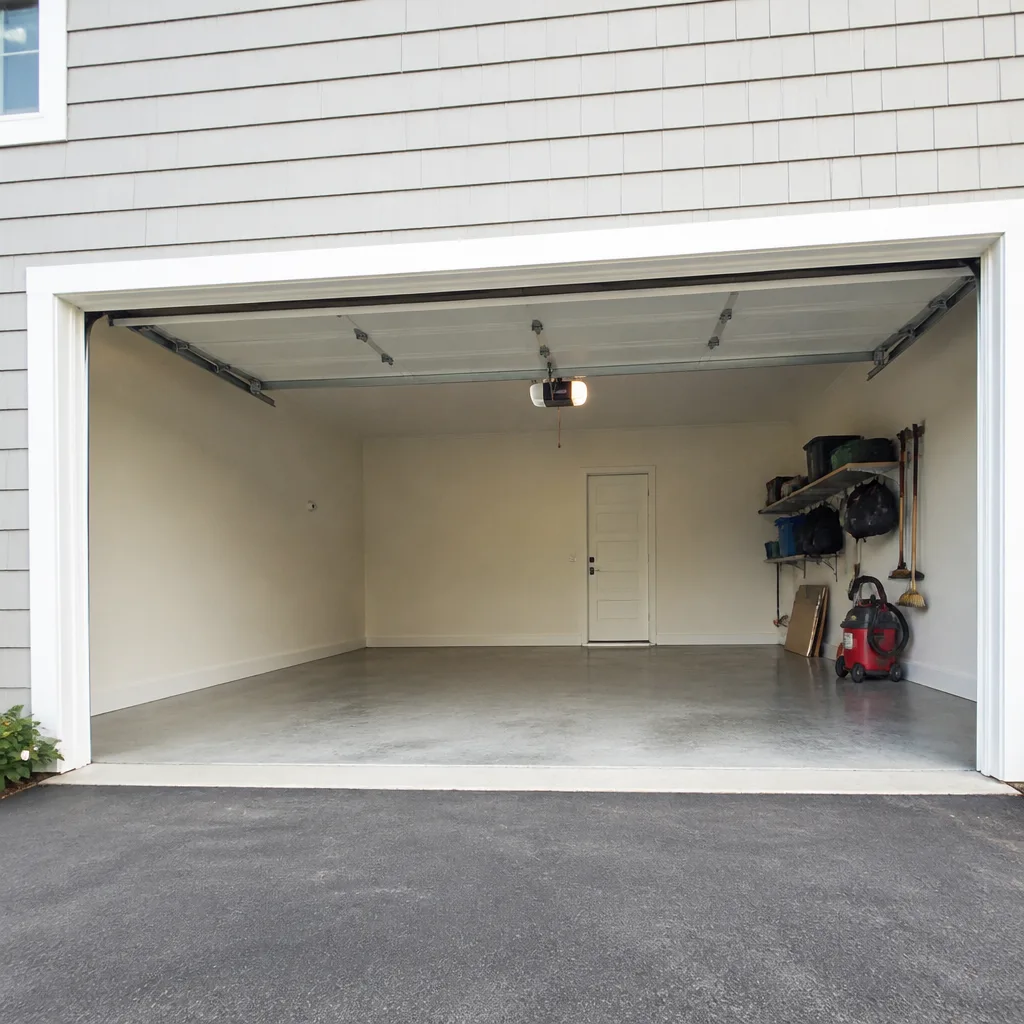 Chamberlain openers
Full 25-point door and opener safety check with every visit - springs, cables, rollers, tracks, and your LiftMaster or Chamberlain opener included
You get a price before we start. It does not change when the pro arrives.
Get your free estimateGarage Door Warning Signs: A Jackson Heights Homeowner’s Reference Guide
A garage door that hesitates for half a second before it moves isn’t “just old.” That pause is information. It usually means the spring tension has drifted or the opener is working harder to overcome friction that wasn’t there a few months ago. Left alone, one of those two things fails completely, and it fails at the worst possible moment, typically with a car parked underneath. Most Jackson Heights homeowners miss the early signals because nobody ever showed them what a healthy door sounds like, moves like, and looks like. This guide gives you that baseline, plus the specific sights and sounds that mean something is wrong on your door.
Quick Answer
The main warning signs of a failing garage door are unusual noises (grinding, popping, squealing), jerky or uneven movement, a door that reverses before closing, frayed cables, and a visibly stressed or stretched spring. Any one of these means the door needs professional inspection before it fails. In Jackson Heights, weather-driven rust on hinges and rollers is an additional early indicator that the hardware is wearing faster than it should.
Styles & brands we work with
- Raised-panel steel
- Carriage house
- Modern flush
- Full-view glass
- LiftMaster openers
- Chamberlain openers
Table of Contents
- What a Healthy Garage Door Should Sound and Look Like
- Sound-Based Warning Signs: What Each Noise Tells You
- Movement Pattern Red Flags
- Visual Hardware Tells: Cables, Springs, and Rollers
- Opener Behavior as a Diagnostic Tool
- Jackson Heights Weathering Signs and Neighborhood Context
- Warning Signs Ranked by Urgency
- Common Mistakes to Avoid
What a Healthy Garage Door Should Sound and Look Like
You can’t spot a problem if you never established what normal is. Before you diagnose anything in Jackson Heights, spend two minutes learning your own door. Stand in the garage while someone opens and closes it, or run it yourself from inside. A healthy door moves smoothly and steadily from closed to open with no pause, no shudder, and a consistent low hum from the opener. The panels travel in a straight horizontal line along the track, with the top section hitting the exact same resting spot every single cycle.
The sound of a healthy door is steady and unremarkable. A soft motor whir, a gentle roll of metal rollers in the track, and a firm stop at the end. No grinding, no squeal, no bang. The torsion spring above the door sits still when the door moves, because it’s doing its job by twisting in place rather than releasing energy abruptly.
Visually, the cables should be tight and cleanly wound on their drums. The hinges should show even color with no flaking. Rollers should spin freely without wobble. Panels should sit flush with one another, with no visible gap at the seams.
Write this baseline down or just keep it in your head. Every problem on the next sections is a deviation from this. If you can describe how your door sounds when it’s right, you’ll know within one cycle when it’s wrong.
Sound-Based Warning Signs: What Each Noise Tells You
Noises are the earliest signal a garage door sends. Different sounds point to different components, and getting the diagnosis right saves a lot of time. Here’s what each one typically means on a residential door in Jackson Heights:
Grinding
Grinding under the door usually indicates rollers that have seized or lost their bearings, or a track that has bent slightly out of alignment so the rollers are scraping the rail instead of rolling along it. If you hear a metallic scrape that grows louder near one end of the door’s travel, suspect a bent track on that side. Continued running on a grinding door accelerates wear on everything above the panel.
Popping
A sharp pop or crack is one of the most serious sounds your door makes. On a torsion spring system, popping can signal a spring that’s beginning to fail along its coil, or a winding cone that’s starting to slip on the bar. On an extension spring system, popping often means the spring hook has begun to detach or the safety cable has come loose. Either way, this is a stop-driving-and-call-a-professional sound. Do not run the door again until a technician inspects it.
Squealing
Squealing is almost always the rollers or hinges. Dry rollers squeal, worn bearings whistle, and hinges with seized pins make a high-pitched complaint on every cycle. This is often the easiest sound to fix, but doing so with the right lubricant and hardware matters. Spraying a torsion spring with anything is dangerous and unnecessary; the spring should never be your lube job.
Silence (When There Should Be Sound)
Silence is louder than any noise. If you press the opener and the door doesn’t move at all and you hear nothing from the motor, the opener has lost power, tripped its internal breaker, or the logic board has failed. If you hear the motor run but the door doesn’t move, the drive gear or the door arm has broken. On a Chamberlain or Genie unit, an intermittent motor that starts and stops is often a sign of a thermal overload or a failing capacitor, and it’s a diagnostic we run often for Jackson Heights customers.
Movement Pattern Red Flags
Sound isn’t the only diagnostic. How the door moves tells you what’s happening in the drivetrain. In our experience, homeowners notice weird noises long before they notice unusual motion, so this section is critical for catching problems that seem quiet but are mechanically serious.
A Door That Doesn’t Travel in a Straight Line
A healthy door travels horizontally along a level plane. If you notice the door rising or descending at an angle, or one corner of the door reaching the ceiling track while the opposite corner lags, you have a track alignment problem or a failing spring on one side of a paired setup. This creates uneven load on the opener and the door panels. Left alone, it eventually causes the door to bind, and that’s when the opener motor or the hinges fail.
Jerking at the Same Point Every Cycle
A door that hits the same “stutter” at the same spot every time is telling you exactly where the obstruction or worn part is. Usually this is a track joint that has separated slightly, a roller that’s partially out of the track, or a hinge that’s seized at that height. The fact that it happens at the same point is a gift, because it narrows the diagnosis to a specific location.
Reverse Before Closing
If the door starts to descend and then reverses back up on its own, the safety sensors have detected an obstruction, the force limits on the opener are set too tight, or a limit switch is misaligned. On a modern LiftMaster or Genie unit, this behavior usually triggers a fault code. Don’t override the sensors to “make it work.” A door that reverses when it shouldn’t is a real hazard, especially in tight Jackson Heights driveways where kids and pets are close by.
Door Reaching the End of Travel and Not Stopping
This is rare but dangerous. A door that hits the open position and keeps going, or hits the closed position and bangs against the floor, has a travel limit problem or a motor that’s ignoring its limits. On a Chamberlain with an older firmware, a faulty limit switch in the head is sometimes the cause. Stop running the door and call for service.
Visual Hardware Tells: Cables, Springs, and Rollers
The most serious problems in a garage door are visible if you know what to look for. Here’s what we inspect on every service call in Jackson Heights, and what you can safely check yourself from the floor with the door closed.
Cables
A healthy cable looks like neatly wound, taut wire rope. A frayed cable looks fuzzy, with individual wire strands visible at bends, usually near the drum on the side the door lifts. Any fraying means the cable is inches from snapping, and a snapped cable is a serious safety event because the door loses its attachment point. Do not touch a frayed cable. Call a professional.
Springs
The two spring types look different but fail the same way. A torsion spring runs horizontally above the door along a steel bar. A stressed torsion spring shows a visible gap (an obvious break) but before it breaks, the spring body may show lines or grooves that suggest fatigue. An extension spring runs along the horizontal track above the door, usually on both sides. A healthy extension spring is a tight coil; a stressed one is stretched or shows visible hook wear. Either way, spring diagnosis is a specialist job because the springs hold the entire weight of the door. We never advise homeowners to touch them.
Rollers and Hinges
Rollers should spin freely. Hold one between your finger and thumb with the door closed, and it should rotate with light pressure. If it wobbles or feels gritty, it’s worn. Hinges should show clean metal at the pin, no orange dust or flaking. Rollers and hinges are usually the cheapest fix in the whole system, but they’re also the pieces most likely to be ignored.
Panels and Tracks
Panels should be flush with no visible separations at the seams, especially on a Clopay or Amarr steel panel door where a bent seam will cause roller drag. Tracks should be straight and level, and the vertical tracks should not show dents or bowing. A bowed vertical track is usually the result of an impact, and it will chew through rollers if it isn’t straightened or replaced.
Opener Behavior as a Diagnostic Tool
Your opener is talking to you, often literally. Modern openers have indicator lights, error codes, and behaviors that map directly to specific faults. Jackson Heights homeowners get a huge head start on diagnosis when they learn to read these signals.
Light Patterns
On a LiftMaster or Chamberlain unit, the diagnostic LED on the back of the head flashes a pattern. A common one is the sensor indicator flashing rapidly, which usually means the safety sensors are blocked or misaligned. A different pattern or a solid light can indicate a limit, force, or logic fault. Note the pattern before you call, because it saves diagnostic time. We see this most often on opener repair calls where the homeowner has already reset the breaker, which clears the pattern, so note it first.
Error Codes on the Remote or Display
Some modern openers display numeric codes on the wall control or the motor’s display. They map to limit switches, obstructions, travel calibration, or safety sensor faults. If you see a code, jot it down and hand it to your technician. On a Genie unit, the sequence of flashes on the wall console is often just as informative as a numeric code.
Response Delays and Intermittent Operation
A door that starts to move half a second after you press the button, or works reliably for ten cycles and then fails on the eleventh, is usually showing you a failing logic board, a worn drive gear, or a dying motor capacitor. There’s no safe home fix for a failing logic board, and a worn drive gear on a Chamberlain unit is a known failure mode. Both are better caught early than after the door is stuck open on a cold night.
The Opener That “Used to” Work
If the door used to open smoothly and now the remote only works when you’re standing two feet away, or the wall button works but the remote doesn’t, you’re usually looking at a remote battery or antenna issue rather than an opener failure. But if the remote works fine and the opener is still slow, the motor is working harder, and that’s a friction or force-limit problem upstream.
Jackson Heights Weathering Signs and Neighborhood Context
Jackson Heights is a dense, historic residential neighborhood with a lot of century-old housing stock and a fair share of mid-century apartment buildings with private garages. The local climate moves through hot, humid summers, wet fall months, and freezing winters with road salt tracked onto driveways. That cycle does specific things to garage door hardware that a homeowner in a dry climate never sees.
The most obvious sign is rust. On hinges and rollers, rust starts as orange dust at the pin and the bearing, and progresses to visible flaking. Once a roller has rusted, its bearing seizes and the door drags. Once a hinge has rusted, it stops pivoting smoothly and the panel alignment shifts. On a Clopay steel door, the seams between panels and the bottom edge are where rust finds its way first, because moisture collects there.
Winter freezing and thawing is another local stressor. The bottom weather seal hardens and then cracks, which lets water into the door’s bottom section. The concrete apron in front of a garage door also moves subtly with freeze-and-thaw cycles, and a slight lift at the threshold can cause the door to hit the floor at an angle and stress the bottom panel.
Jackson Heights’ tree-lined streets also matter. Pollen seasons and leaf debris end up in the tracks, especially on garages near mature street trees. That debris clogs rollers and is often the difference between a smooth cycle and a grinding one. Neighborhoods like Jackson Heights’ historic district contain a lot of wood-frame garages and older steel doors, and both benefit from a spring and hinge inspection every year. In our experience, a door that is ten to fifteen years old in this climate almost always has at least one hinge or roller that needs replacing.
Warning Signs Ranked by Urgency
Not every warning sign is a crisis. Use this ranked list to figure out whether to schedule a routine visit, call for the same day, or stop using the door immediately.
- Call now, do not run the door: Visible frayed cables, a visible gap in the spring, a door that bangs at the end of travel, or a sharp popping sound from the spring area. These are safety events, not maintenance items.
- Same-day service recommended: A door that reverses unexpectedly, a door that jerks at the same point, a grinding noise that’s getting louder, or an opener that runs but doesn’t move the door. These indicate active wear that will compound quickly.
- Schedule routine service: Squealing rollers, a single noisy hinge, a slightly noisy opener, a slow opener response, or visible rust starting on hardware. These are fixable before they become a bigger repair, and a proper service is usually the cheapest way to keep a door running.
- Watch and log: Minor cosmetic rust, a slightly wobbly roller, or a remote with reduced range. Track these for a few weeks and mention them at your next service visit.
Common Mistakes to Avoid
- Testing the door from underneath. Never stand inside the door’s path while it’s moving, and never try to catch or stop a falling door with your hands. The spring system holds the entire weight of the door, and a manual catch isn’t going to work.
- Spraying lubricant on the torsion spring or on the tracks. Lubricant belongs on rollers, hinges, and bearing plates, never on the torsion spring, the spring bar, or the track surface. A lubed track will cause the rollers to slide instead of roll, which accelerates wear.
- Disconnecting the safety sensors because “the door keeps reversing.” That reverse is the sensor doing exactly its job. Disabling it turns a warning into a hazard, and the reverse will usually keep happening anyway because the underlying fault is elsewhere.
- Assuming a slow opener is a worn-out opener. On most Jackson Heights doors, a slow opener is compensating for friction from dry hinges or a dragging roller. Replacing the motor won’t fix the underlying problem, and you’ll be back where you started.
- Forcing a stuck door up by hand. If the door won’t move under opener power, pulling it by hand stresses the panels, the cables, and the spring system in ways that were never designed for it.
- Ignoring rust on hinges and rollers. Rust is the earliest, most fixable signal in this climate. Replacing a rusted hinge is inexpensive; replacing a panel that was chewed by a seized hinge is not.
- Calling a general handyman for spring work. Springs, cables, and track alignment are a specialist discipline because the forces involved are far larger than they look. A generalist is unlikely to be equipped for a torsion spring job, and the consequences of a mistake are serious.
See the difference
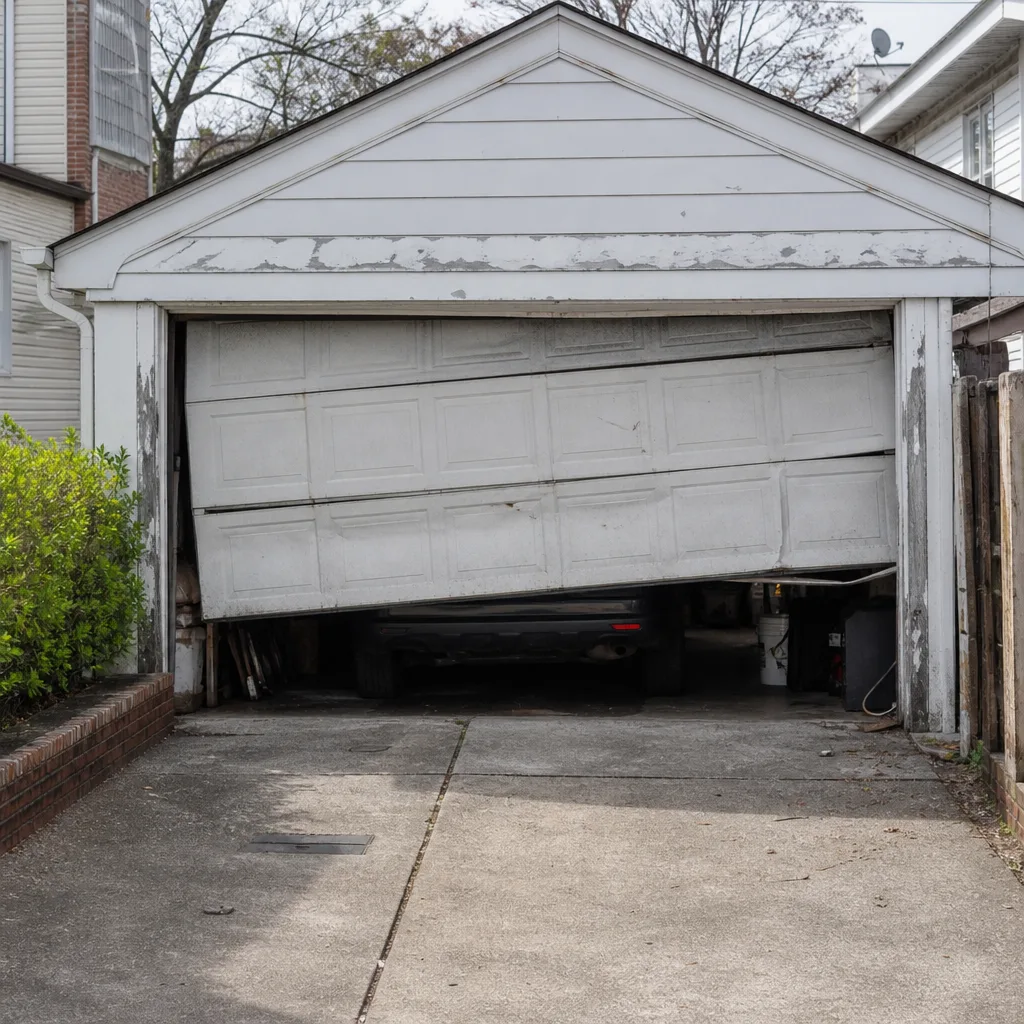 Before
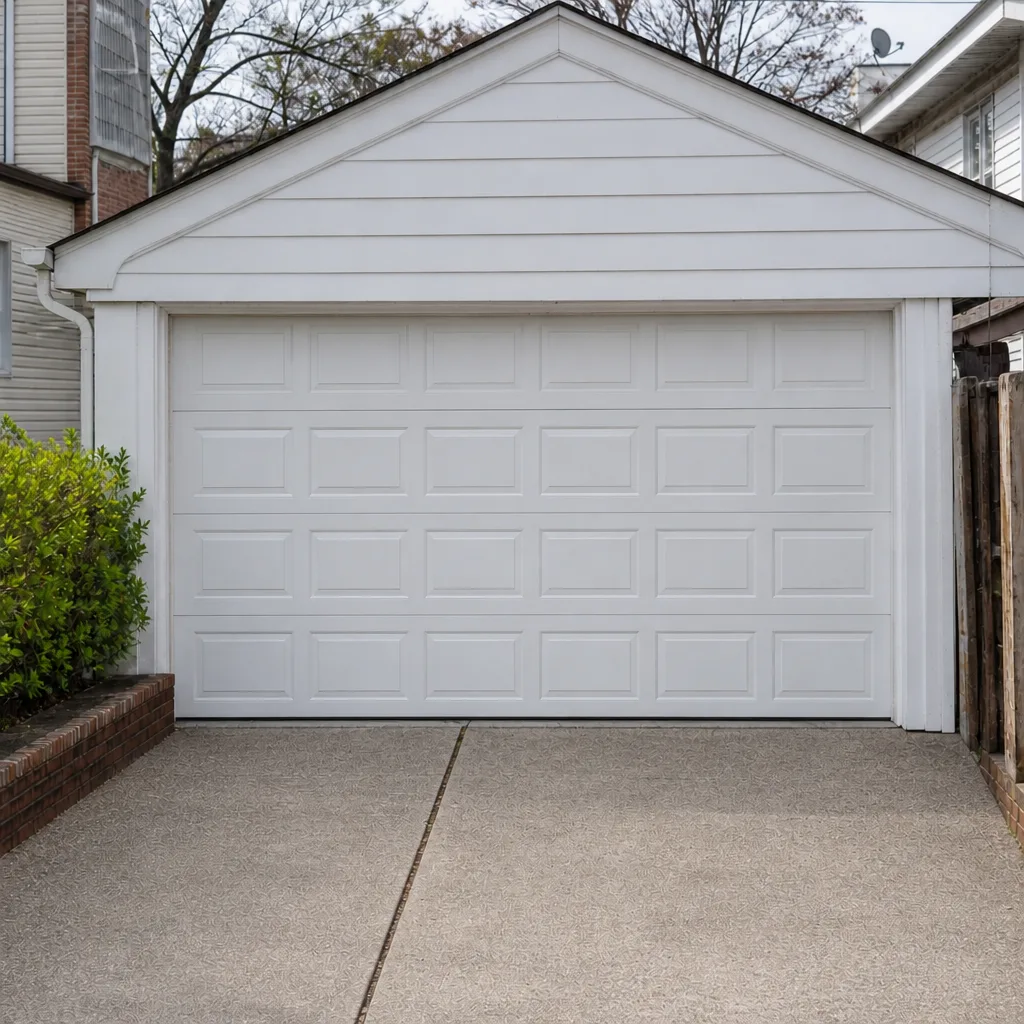 After
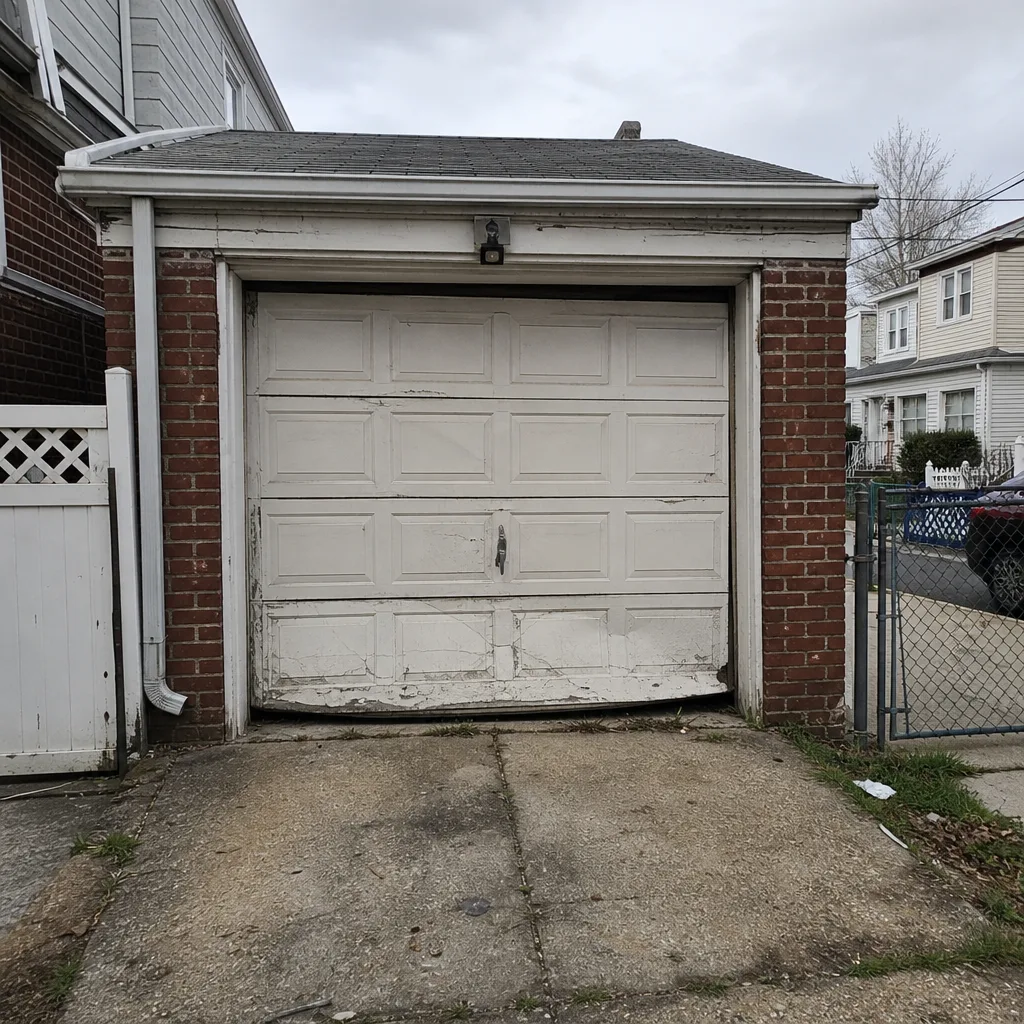 Before
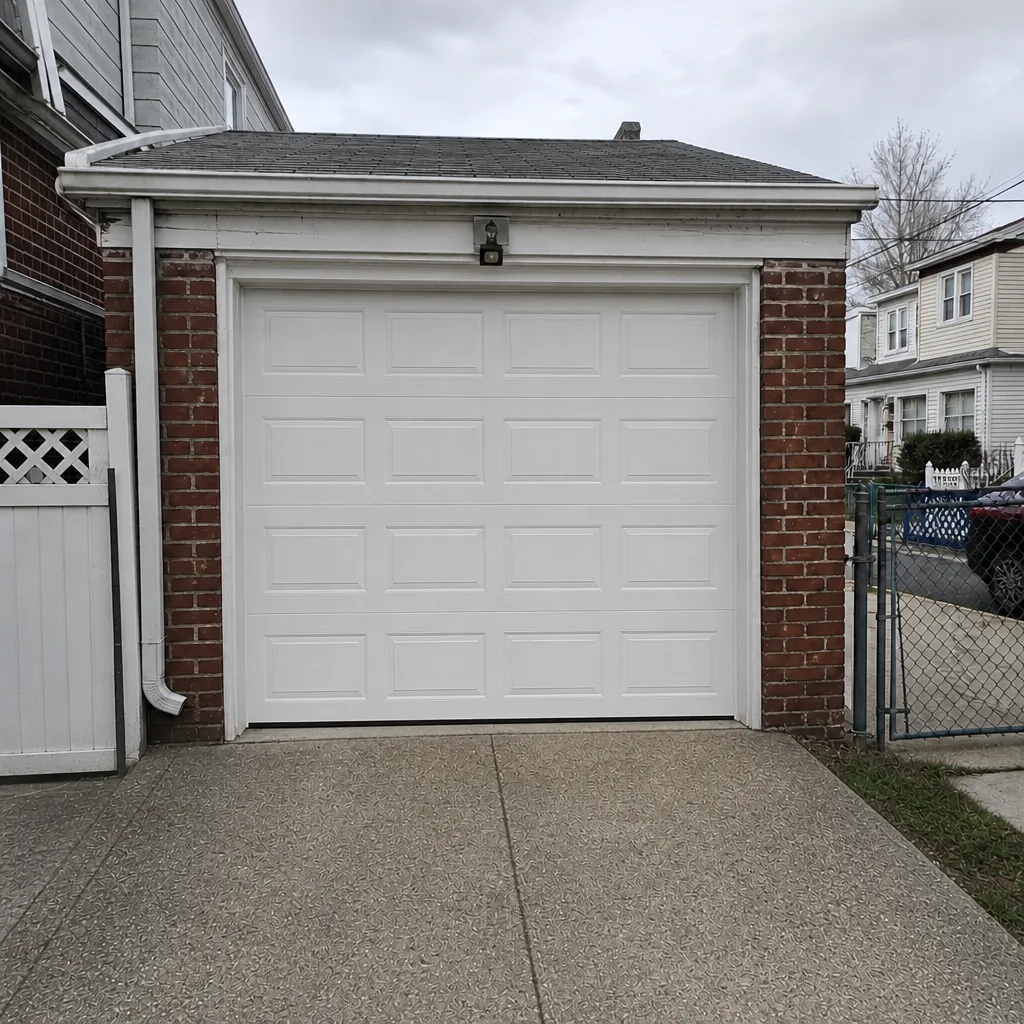 After
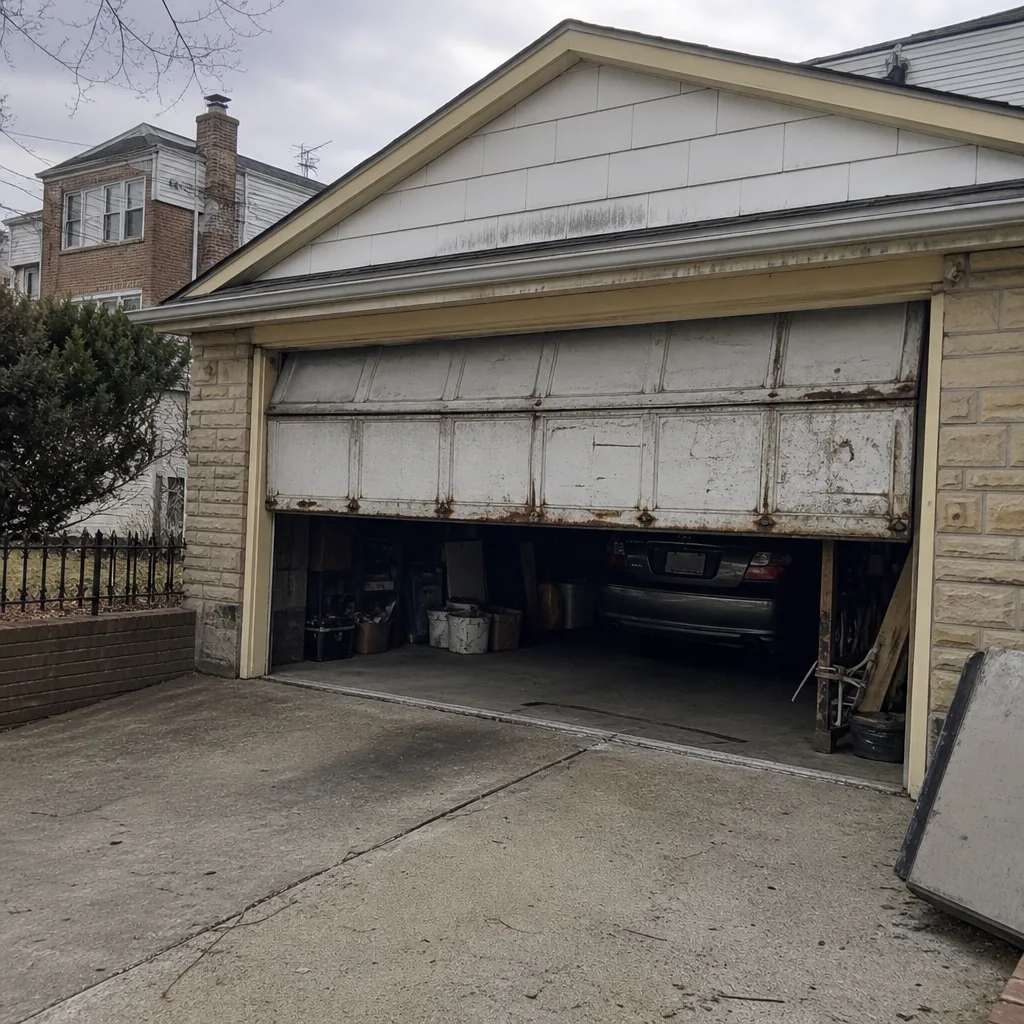 Before
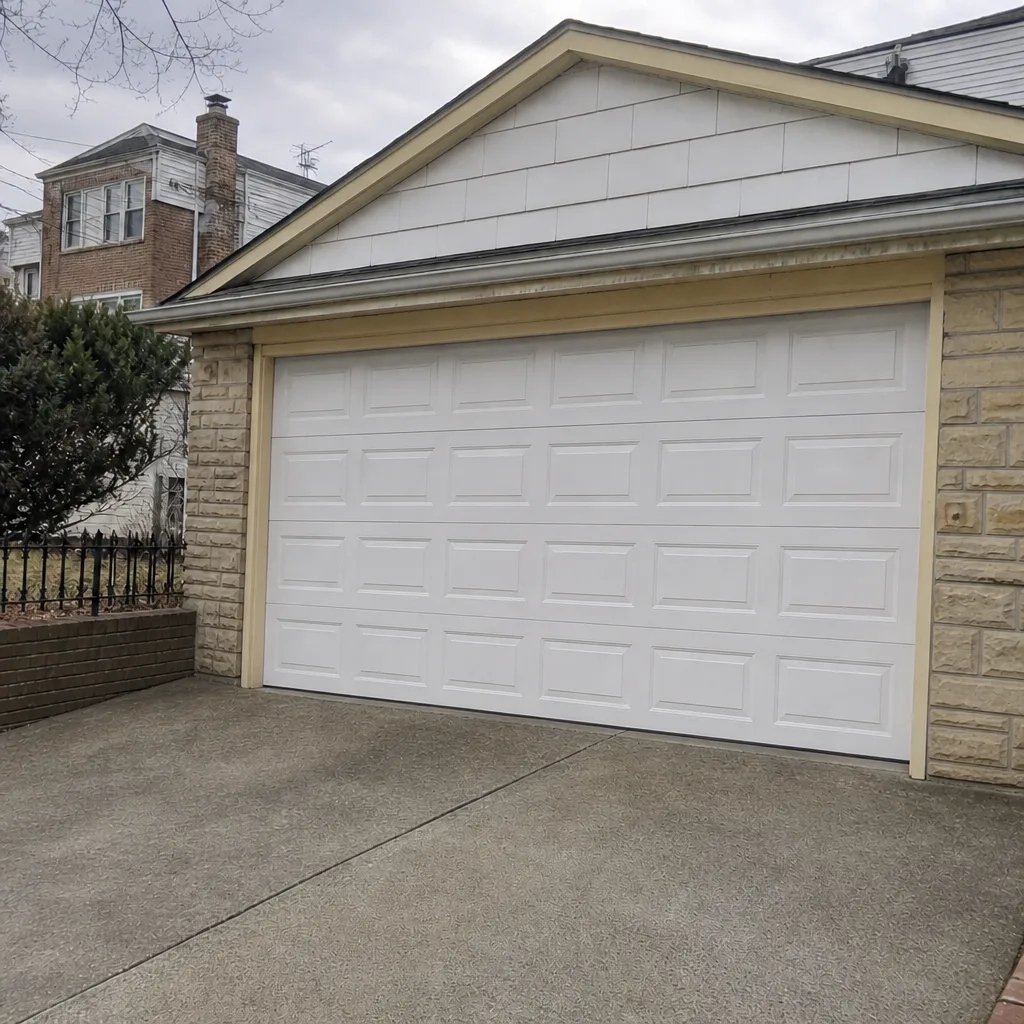 After
When to Call a Professional
Call a professional the moment you see a frayed cable, a snapped or visibly stressed spring, popping from the spring area, a door that reverses before closing, or a door that won’t move with the opener but works by hand. Any of those is a same-day situation, and if a car is trapped inside or the home is unsecured with the door stuck open, it’s an emergency. Jackson Heights Garage Door Repair offers genuine same-day and emergency response, backed by technicians who work across LiftMaster, Chamberlain, Genie, Clopay, Amarr, Wayne Dalton, Craftsman, and Raynor equipment, so the system in your garage is one we already know. For routine inspection, we’ll come out and look at the full lifecycle of the door, from the springs and cables to the opener, and we’ll give you a written estimate before any work begins. If you’re not sure whether your noise or symptom is an emergency, call and we’ll help you decide.
Frequently Asked Questions
Typical spring repair in Jackson Heights runs within a modest range for a single spring, and a matched pair is usually replaced together for roughly double that, since paired springs wear at the same rate. The written estimate sets the final price, quoted before any work starts. We can usually repair a spring the same day if you call early. Call (833) 402-5989 for an exact quote; estimates are free.
A quiet but slow door usually means the opener is working harder than it should because of friction from dry hinges, dragging rollers, or slightly misaligned tracks. It’s a warning, not a failure yet, but the underlying wear will compound if ignored. Our garage door opener repair service covers exactly this kind of diagnosis. Call (833) 402-5989 to get it checked.
Yes, same-day service is a standing offering for broken springs, off-track doors, and opener failures, and genuine emergency response is available when a car is trapped or the home is unsecured. Call (833) 402-5989 and we’ll give you an arrival window and confirm the price before we come out.
Torsion springs run horizontally along a steel bar mounted above the door. Extension springs run along the horizontal tracks on either side of the door and look like coiled cables. Knowing which system you have matters because diagnosis and part replacement differ. A trained technician will confirm the type as part of the assessment.
Yes, in Jackson Heights specifically. A rusted roller seizes and drags against the track, which stresses the opener and eventually bends the track. A rusted hinge stops pivoting and pushes the panel out of alignment. Replacing rusted hardware early is one of the cheapest preventive actions available on a garage door. If the rust is widespread, call (833) 402-5989 for an inspection before it spreads. For full mechanical repair, see our garage door repair service page.
Replacement makes sense when the panels are structurally degraded, the frame is compromised, or multiple components are failing at once because the system is at end of life. A single failing part on an otherwise healthy door is usually a repair, and repair is the answer most of the time. If you’re weighing replacement, our garage door installation service includes a free measure and a written price for a new door.
The local professionals we connect you with are licensed and insured as their state requires, and trained on residential garage door systems. Our technicians have up to 8 years of experience across springs, openers, panels, tracks, and full installations. For service at your Jackson Heights home, call (833) 402-5989.
The Bottom Line
Garage door failure is rarely sudden. It’s almost always telegraphed by a sound, a stutter, a rust pattern, an opener light, or a spring that’s starting to look tired. The Jackson Heights homeowner who learns their own door’s baseline and checks the hardware every few months catches most problems at the cheap-to-fix stage. The homeowner who ignores small noises ends up with a broken spring, a bent track, or an opener that needs replacing in the middle of a cold week. Torsion springs, cables, track alignment, and opener electronics are not home-repair territory. Jackson Heights Garage Door Repair offers free estimates, upfront pricing quoted before any work begins, and same-day and emergency service for Jackson Heights homeowners who need to be back up and running today.
If a sign on this list matches what you’re seeing or hearing, don’t wait. Call (833) 402-5989 for a free estimate and a straight answer about what your door needs. You can also start at Jackson Heights Garage Door Repair for our full range of services.
Written by the team at Jackson Heights Garage Door Repair.